GET STUFF DONE

A community resource to help people simply get stuff done, where we can share our successes and encourage others to have positive results. Please note though we're not trained wellbeing therapists. We're just like you, trying to make ourselves happier, healthier and calmer one day at a time, sharing what we have learned so far.

  • The job, the juggle, and the headspace it needs.


    There’s a moment, usually around the point when you’re in bed and trying to get to sleep when your brain won’t shut up. I’m guessing this hits every self-employed person at one time or another:

    “How is it this hard… and no one even notices?”

    Being your own boss sounds great. Until you realise that also means being your own marketing team, receptionist, sales department, creative director, financial controller, admin assistant, cleaner, courier and somewhere down the list actually doing the work you’re paid for.

    It’s not a complaint.
    It’s just… a lot.


    🎩 The Many Hats (And You’re Wearing All of Them)

    Let’s take a moment to list out the things self-employed folks juggle.
    Feel free to tick them off like a bingo card.

    • Find the work – Post on social media, attend networking events submit tenders. Refresh inbox. Hope something sticks.
    • Answer enquiries – The “quick” replies that steal hours from your day.
    • Talk to potential clients – Smile. Sound confident. Try to remember what you charge.
    • Visit clients – Pack the car or the van. Show up on time, appear fresh and eager even though you may have been at work since 6am not had lunch or a break and it’s now 7pm…you can always see the kids tomorrow.
    • Write quotes – Try and work out a cost that sounds fair but won’t leave you out of pocket or too expensive to get the actual work.
    • Carry out the work – Which, ironically, is probably the only bit you really enjoy…and the only bit you actually get paid for.
    • Chase payments – Send polite emails that scream “PLEASE PAY ME” in invisible ink.
    • Pay others – Staff, contractors, suppliers. They need paying even if you haven’t been paid yet.
    • Handle problems – No one else is fixing it. It’s just you. Could be cash flow, staffing, suppliers or quality issues.
    • Switch off at home – Attempt to have a life while your brain replays the to-do list. (Easier said than done).

    And repeat.


    🧠 It’s the Thinking That’s Tiring

    It’s not just the tasks. It’s the constant decision-making.

    Do I reply now or later?
    Should I chase that enquiry again?
    Is my quote too high? Too low?
    Will this client pay on time?
    Will I be able to pay everyone else on time?

    There’s no manager to reassure you.
    No colleague to bounce an idea off.
    No team to pick up the slack.

    It’s you, your thoughts, and a lukewarm brew (if you have time to make one).


    💸 When You’re Waiting to Get Paid (and the Bills are Due Tomorrow)

    You might be doing everything right, delivering work on time, providing a great service, but still lying awake at night wondering when the invoice is going to clear.

    And when it’s not just your money on the line?

    You’ve got suppliers waiting.
    A contractor who needs paying.
    Maybe even staff to look after.

    That’s a lot of responsibility and a lot of pressure that no one sees.

    You’re juggling cash flow in your head, running mental spreadsheets at 2am, and hoping the next payment lands before the next bill does or you may be dipping into your families savings to pay the bills.


    🙃 You Can Love It… And Still Find It Hard

    Being self-employed can be amazing. You get freedom (in theory). Flexibility. A chance to build something of your own. It can be so rewarding but very lonely. Even the owners directors of successful companies have days where they absolutely dread going in to work.

    You’re carrying everything the work, the risk, the reputation and still showing up with a smile.


    ✍️ This Is Where Writing It Down Helps

    You can’t clone yourself (yet), but making space in your head may help ease at least some of the worries.

    A simple daily to do list or journal can help:

    • Prioritise what actually matters today
    • Capture thoughts before they spiral out of control and you start catastrophising (we’ve done a blog on this)
    • Track your effort (not just your results)
    • Close it off at the end of the day, note down what the plan or to do list is for tomorrow then close the page and breathe.

    🛋 Final Thought

    If you’re feeling the weight of working alone, you’re not failing.
    You’re carrying more than most people will ever see.

    You don’t need to do it all perfectly.
    You just need a way to manage the noise and remember a bit of kindness for yourself along the way.


    Here’s a short list of some of our other posts that may help you if you’re struggling to get through the days.
    A Pep Talk You Didn’t Ask For But Might Need
    Routine Builds Resilience
    The Reset Kit

    And our favourite – Do Nothing On Purpose

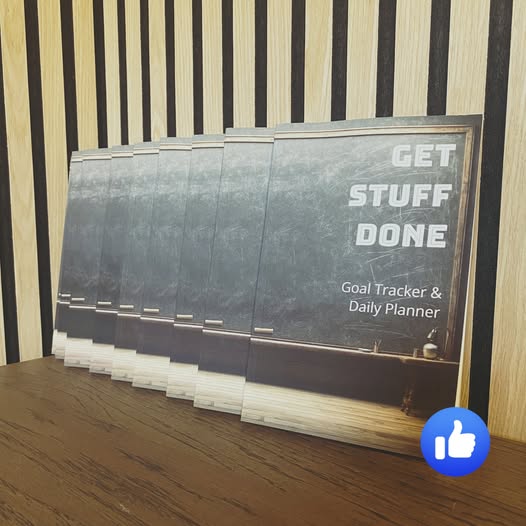
    👉 If you want to give journaling a go, take a look at our Get Stuff Done Daily Planner and Goal Tracker. There are no dates in this, you can dip in and out of it when you feel you need to.

  • Join the Get Stuff Done Challenge. One page a day, one win at a time.

    If your brain feels like a browser with 23 tabs open (and at least three playing music), it might be time for a reset. You don’t need dramatic life overhaul. Just a gentle, easy to action plan to help you feel more clear-headed and in control.

    Take the Get Stuff Done Challenge: a 7-day journal journey to declutter your thoughts, sharpen your focus, and create a little breathing room just using a notepad, sticky notes or scraps of paper you have lying around. You could even use the comments on this blog and share your actions with others.

    No colour-coded systems. No pressure.
    Just a pen, a notebook (we do recommend the Get Stuff Done Journal, naturally), and a few minutes a day.


    🗓️ How It Works

    Each day for the next 7 days, you’ll follow a short prompt.
    Write, reflect, plan, breathe. That’s it.

    You can do it first thing in the morning, before bed, during your tea break , whatever suits you.
    No catch-up days. No guilt. Miss a day? Just carry on.


    ✨ The 7-Day Challenge – Download your checklist here

    🧠 Day 1: Brain-Dump Bonanza
    Empty your head. List every task, idea, reminder, and worry. Don’t organise it, just write it as it pops in to your head. If you remember something else later just add it.

    🔍 Day 2: Spot the Priorities
    Look back at your list. Highlight what actually matters this week. Choose three. That’s your focus.

    ☕ Day 3: Slow Morning Plan
    Today, set your intention before checking your phone. Open your journal. Write one thing you want to do, it doesn’t have to be something you need to do. You just have to write something down and do it.

    ⛅ Day 4: Mental Clutter Check-In
    What’s on your mind that doesn’t belong there? What are you overthinking or replaying? Write it down. Let it go (or make a plan for it). You could even write it down and then tear it up or shred it. I would say burn it but we don’t want to have responsibility for you burning your house down. 🔥🚒

    📝 Day 5: One Small Win
    Pick something ridiculously achievable, then just do it. Clean one drawer. Send that email. Water your plant. Feel smug about taking that little win.

    💭 Day 6: What Do You Need Right Now?
    Be honest. Do you need a nap? A hug? A decision made? Clarity often starts with naming what you actually need.

    🌱 Day 7: Reflect + Reset
    What’s shifted? What felt good? What’s still swirling around? Write one thing you want to carry forward into next week.


    📓 Make It Yours

    You can do this challenge in the Get Stuff Done Journal — it’s undated, unbossy, and designed for real life.
    Use the daily page layouts to jot down your answers, map out your top three, or scribble a small win in the corner.

    Don’t have one yet? Grab yours here and start whenever you like. One thing’s for sure, the journal won’t judge.


    🎯 Final Thought

    You don’t need a full reset.
    You just need a few good pages, a few honest moments, and a little less noise in your mind.

    Join the challenge. Clear your head. Get back to what matters, one little note at a time.

  • (And Why Waiting for the New Year Is a Bit Overrated)


    Let’s be honest: we’ve all done it.
    Told ourselves “I’ll start fresh in January.” Or “New Year, New Start.” Or that old classic: “I’ll get back on track when life calms down a bit.”

    The truth? Life never really calms down, not for long, anyway. And January isn’t some magical month where all your habits suddenly behave and your to-do list turns into a fairy tale. It’s cold. It’s dark. To top it off January is the longest ever month. Most people get paid early in December which means after the expense of Christmas they’re broke for 5 to 6 weeks!

    So if you’re feeling the urge to make a change now, in this slightly soggy, slightly sleepy, shifting-of-seasons moment. We say start it NOW!


    The Season Shift Slump Is Real

    When the seasons change, so do we.

    Maybe you’ve noticed it lately a dip in energy, or the strange restlessness that creeps in as the evenings draw in and the jumpers come out. You might be feeling a bit… off. Like you’re floating through the days without a clear direction.

    That’s not laziness. That’s nature. And your body, the clever thing that it is, might just be nudging you to pause, reflect, and reset.

    You don’t need to hibernate. You need a plan.


    Why Now Is the Perfect Time to Get Started

    We’re often sold the idea that planning your life only happens once a year, around New Year’s Eve, after a few beers or proseccos and a lot of reflection.

    But now? Now is underrated. Now is available. Now has zero pressure.

    There’s no “new year, new me” panic.
    Just you, right now, deciding you’re ready to take charge, gently and on your own terms.


    Here’s How to Start (Without Overwhelm)

    It doesn’t have to be complicated. In fact, it shouldn’t be. That’s where the Get Stuff Done Journal comes in.

    No dates. No guilt. No wasted pages if you miss a week.
    Just open it today, tomorrow, whenever and begin.

    Here’s a simple way to use it now, as the seasons shift:


    ✏️ Step 1: Brain-dump the chaos

    Grab a brew, sit somewhere quiet, and write down everything swirling around in your brain. Tasks, goals, nagging thoughts, birthday presents you forgot to buy. Get it out.


    📌 Step 2: Pick your priorities

    Look at your list and ask: What actually matters this week?
    Circle three things. Just three. You don’t need to do everything. You just need to do what matters most.


    🧠 Step 3: Set your intention

    Each day, give yourself a word or a vibe to carry through the day.
    It might be “calm”. It might be “bold”. It might just be “get through it with snacks.”


    ✅ Step 4: Small wins = big progress

    Write down one simple thing each day you can definitely do. Something that takes less than 5 minutes. One small win a day is 7 wins a week. Do the maths, that adds up.


    The Best Time to Start Was Yesterday.

    The Second-Best Time? Right Now.

    There’s no perfect day to begin.
    No golden Monday or life-altering January 1st.
    Just now. You, your thoughts, a pen, and a plan.

    And the Get Stuff Done Journal is here whenever you’re ready — no pressure, no dated pages, and no drama if you miss a day. It’s made for real life, not just for resolutions.


    Final Thought

    Forget the calendar. Forget waiting for the “right time.”
    If your brain’s feeling foggy and the darker evenings are creeping in, use this moment to reset.

    Write a plan. Make it simple.
    And start Getting Stuff Done, not someday, but now.


    👉 Ready to start? Explore the Get Stuff Done Journal read some more of our blogs and make “now” your turning point. Grab yourself one of our Goal Tracking and Daily Planner Journals off Amazon for less than £6 >>BUY IT HERE<<

    Get Stuff Done Goal Tracker and Journal
  • Manifesting. It’s one of those words you’ve probably seen floating around Instagram, usually alongside mood boards, crystals, and people meditating on beaches. But what is manifesting, really? And how do you actually start without needing to move to Bali or chant under the moon?

    Let’s break it down in plain English.


    So, What Is Manifesting?

    Manifesting is the practice of focusing your thoughts, feelings, and actions to bring something you want into your life. Think of it as giving your brain a sat-nav. Without clear instructions, you’ll just wander aimlessly, but once you set the destination, you can start moving in the right direction.

    It’s not about just wishing really hard and hoping the universe delivers a Ferrari to your driveway. It’s about creating clarity, shifting your mindset, and taking aligned action.


    The Science-y Bit (Without the Jargon)

    When you start focusing on what you want, your brain filters what you notice. It’s why when you think about buying a red car, suddenly you see them everywhere. Apparently that’s your Reticular Activating System at work, helping you spot opportunities that match your focus.

    Combine that with positive psychology (visualisation = boosted confidence + motivation), and you’ve got yourself a very practical tool.


    Where Do I Start?

    Here’s your starter kit for manifesting without the fluff:

    1. Clarity – Get specific. Don’t just say, “I want more money.” Instead: “I want to earn an extra £500 a month doing something creative.”
    2. Visualisation – Imagine it’s already yours. How does it feel? What are you doing differently?
    3. Affirmations – Write down short, positive statements in the present tense (e.g., “I am confident and creative in my work”).
    4. Be Thankful – Focus on what’s already good. Gratitude keeps your brain tuned into positivity.
    5. Aligned Action – Take steps that match your goal. Want that new job? Apply. Want to feel fitter? Go for a walk today.

    Download our free Manifesting Starter Checklist here to help you get going.


    Manifesting in Daily Life

    • Start your day by journaling what you’re calling in (don’t forget you can get the Get Stuff Done Journal for less than £6>>> Right Here).
    • Stick affirmations somewhere visible (mirror, fridge, screensaver).
    • Make a vision board on paper, Pinterest, or even just your phone wallpaper.
    • Celebrate tiny wins, they’re proof it’s working.

    Pitfalls to Dodge

    • Don’t just sit there waiting for magic. Action matters.
    • Avoid vagueness, “I want to feel better” is too broad. What does “better” look like?
    • Don’t give up after a week. Manifesting is a practice, not a magic trick.

    Final Thought

    Manifesting isn’t mystical nonsense, it’s mindset + focus + consistent action. Think of it as working with your brain, not against it. Anyone can start, and the best time is now.


  • *Spoiler Alert, you don’t need a 5am wake up call to be productive!

    Let’s talk mornings.

    You know the type. The ones filled with cold plunges, green juices, gratitude meditations, and 45-minute power workouts, all before 7am.
    Whilst that maybe lovely for some…it isn’t necessarily for everyone.

    For the rest of us, who just want to get through the day without losing our marbles, the idea of a perfect morning can feel like another thing on the to-do list. Right between “be more productive” and “remember to actually eat some food”.

    That’s why we created something a bit different: a morning routine you can actually stick to, even if you’re still half asleep, your kettle may just be your emotional support appliance.

    It’s called: The Morning Brew Routine.


    Why Your First 10 Minutes Matter

    The first few minutes of your day are like setting the tone for a playlist. Start chaotic, and the chaos tends to carry on. Start calmly, with clarity and intention and you’ve got a fighting chance of staying grounded.

    The good news?
    You don’t need an hour. You don’t need a guru.
    You just need 10 minutes, a pen, and possibly a biscuit (might be a little early for a biscuit).


    The Morning Brew Routine ☕

    Here’s your step-by-step guide to winning the day before your tea (or coffee) goes cold.


    1. Put the kettle on

    This is your cue to pause.
    Not scroll. Not stress. Just… breathe. The kettle becomes your personal productivity gong.


    2. Open your journal

    Flip to today’s page. No pressure to write a novel. No long lists of guilt. Just add two or three things you would like to accomplish.
    If you don’t have a journal, you can pick ours up from Amazon for less than £6 GSD Journal>>Get Yours Here


    3. Pick your Top 3 Priorities

    What really needs doing today? Not everything, just the top three. These are the things that, if you ticked them off, you’d feel good.


    4. Choose One Small Win

    Pick something so doable it’s laughable.
    Examples:

    • Email Pete back
    • Water the plant
    • Take the bins out like a responsible adult
    • Make the bed

    Small wins build momentum. Momentum builds good days.


    5. Set an Intention

    One word. A vibe. A mindset.
    Something like: calm, focused, brave, playful, patient, ruthless (if it’s that kind of day).

    It’s a quiet nudge from your future self.


    6. Sip your brew

    That’s it. You’ve done it.
    You’ve grounded your mind, clarified your priorities, and claimed the day, all before your first proper sip.


    Why This Works

    • You’ve told your brain: “Here’s what we’re doing today.”
    • You’ve chosen clarity over chaos.
    • You’ve created a micro-ritual that puts you in charge, before the world barges in with its notifications and demands.

    And when your tea or coffee is gone? You’re ready.
    You’ve already won the day, the rest is just bonus points.


    Tips to Make It Stick

    • Keep your journal next to the kettle.
      If it’s out of sight, it’s out of mind.
    • Let it be easy.
      Don’t overthink it. Your handwriting can be scruffy. Your thoughts can be half-baked. Just show up.
    • Pair it with something you already do.
      Tea. Coffee. Feeding the cat. Whatever works.

    Final thought

    A good morning doesn’t need to be impressive.
    It just needs to be intentional.

    So tomorrow morning, before your tea goes cold, sit down with your journal and claim the day for yourself.

    Trust us, it’ll still be piping hot by the time you’re done. ☕


    👉 Ready to give your mornings a makeover?
    Explore other articles on the Get Stuff Done Journal and start your day the way you want to with purpose, presence, and maybe a biscuit.

    Comment below with one of the items off your to do list and don’t forget to let us know if you managed to achieve it.

  • 7 Days to Shake Off the Seasonal Slump

    Summer has waved us goodbye, the days are getting shorter, and before you know it, you’re considering hibernation as a valid life choice. If the change of season leaves you feeling sluggish, low in energy, or just not yourself, you’re not alone.

    But here’s the good news: autumn doesn’t have to mean gloom. In fact, it can be the perfect time for a gentle reset, a chance to pause, refresh, and get yourself ready for the months ahead. That’s where the Autumn Reset Challenge comes in.


    Why an Autumn Reset?

    Think of autumn as nature’s tidy-up. Leaves fall, things slow down, and there’s a sense of preparing for what’s next. A reset helps you do the same for your mind and body, it will clear out the mental cobwebs and spark some fresh energy.


    The 7-Day Autumn Reset Challenge

    Here’s your week-long challenge to shift your mindset and lift your mood. No pressure, no perfection needed, just small, manageable steps.

    🍁 Day 1: Clear One Space

    Tidy your desk, a drawer, or that chair piled high with clothes. Creating a clear space = creating a clear head.

    🍁 Day 2: Morning Light

    Get outside for at least 10 minutes of natural light before 10am. It boosts energy and helps balance your mood.

    🍁 Day 3: Move Differently

    If you usually walk, try yoga. If you usually cycle, try a dance video. Shake things up — your brain loves novelty.

    🍁 Day 4: Cosy Ritual

    Light a candle, make a proper cup of tea, or take a warm bath. Slow down and enjoy the cosy side of autumn.

    🍁 Day 5: Gratitude Jot

    Write down three things you’re grateful for — big or small. (Yes, your favourite biscuits count.)

    🍁 Day 6: Connect

    Message a friend, arrange a coffee, or call someone you’ve been meaning to. Connection is fuel for the soul.

    🍁 Day 7: Reset Goals

    Ask yourself: What do I want to feel by the end of the year? Write down one small step you can take towards it this week. Download our Autumn Reset Checklist Free


    Your Autumn Toolkit

    To keep the momentum going, you could:

    • Create a mini checklist for the 7 days.
    • Repeat the challenge anytime you feel sluggish.
    • Adapt it to suit your lifestyle — this isn’t about rules, it’s about feeling good.

    Final Thought

    Autumn might bring shorter days, but it also brings the chance to pause, reset, and find new energy. Try the Autumn Reset Challenge and see how a few small changes can shift your whole season.

    Don’t forget the Get Stuff Done Goal Tracker & Journal is available on Amazon for just £5.60

    Get Stuff Done Goal Tracker and Journal
  • We’ve all been there. That weird stage of life where every day feels the same, the excitement’s gone, and you can’t remember the last time you genuinely looked forward to something. It’s like living in a never-ending episode of Groundhog Day — except Bill Murray isn’t around to make you laugh.

    If you’re nodding along, don’t panic. Being “stuck in a rut” doesn’t mean you’re broken, it just means your brain’s gone a bit autopilot. Let’s look at how you can spot it, why it happens, and most importantly, how to get moving again.


    Signs You Might Be in a Rut

    • You’re on first name terms with the ceiling in your living room because you’ve sat and stared stared at it far too much.
    • Your daily routine feels the same, day in day out.
    • The future feels a bit… beige.
    • Even rest days leave you feeling tired.

    If any of these ring a bell, congratulations: you’re officially in a rut. The good news? There’s a way out.


    Why We Get Stuck

    There are a few sneaky culprits:

    • Fear of change: It’s easier to stay put than risk rocking the boat.
    • Over-cosy comfort zones: A safe little bubble is nice… until it starts to suffocate you.
    • Life on autopilot: Letting things “just happen” without checking in on whether you’re happy with it.
    • Mismatch of values: Living a life that doesn’t quite line up with what really matters to you.

    Quick Wins to Bust the Rut

    You don’t need to overhaul your entire life overnight. Try a few small shifts first:

    • Take a different route to work or the shops. New sights might spark an new idea.
    • Learn something random (juggling, Spanish, coding, whatever tickles your fancy to get the grey matter ticking over a little quicker).
    • Declutter a drawer. Clearing space outside can clear space inside too…nothing feels better than a good clearout!
    • Move your body in a new way, any kind of movement is good for you yoga, dance, hiking, hula hooping. No rules, just movement.

    Bigger Steps for a Proper Reset

    When you’re ready to go deeper, here’s where the magic happens:

    • Reflect: Ask yourself what’s missing. Purpose? Fun? A challenge?
    • Reset challenge: Give yourself a 30-day project (journalling, daily walks, or learning a skill).
    • Dream goals: Revisit what you really want in life and see if your current path matches.
    • Talk it out: A chat with a mentor, coach, or even a brutally honest friend can shift perspective fast.

    Your Rut-Busting Toolkit

    Here’s a quick checklist to get you started:
    ✅ Try one small change today
    ✅ Write down one thing you’d love to try this month
    ✅ Declutter one drawer, shelf, or folder
    ✅ Imagine your life a year from now if you keep doing the same thing… then imagine it if you don’t

    Which one feels more exciting? Exactly.

    Let us know in the comments what you’re going to do to get out of your rut.


    Final Thought

    Being stuck in a rut isn’t a life sentence. It’s a gentle nudge that something needs to shift. With small steps and a little curiosity, you’ll find your spark again — and probably surprise yourself along the way.

    Don’t forget our Journal is available to help you set and track goals, one day or step at a time. Head over to Amazon to get your copy>>>> GET STUFF DONE JOURNAL & GOAL TRACKER

  • How I tricked my brain to like doing the hard stuff

    Based on “The Mindset Mentor” podcast with Rob Dial

    Let’s face it: most of us would rather scroll Instagram, reorganise the shed, or stare blankly at the ceiling than tackle that thing we know we should be doing. But what if the problem isn’t laziness? What if it’s fear wearing a cosy dressing gown of procrastination?

    In this episode of The Mindset Mentor, Rob Dial breaks down how he rewired his own mind to stop resisting effort and actually enjoy doing hard things…and how you can too.

    We have summarised it here on Get Stuff Done but have also included a link to the full podcast on YouTube at the bottom of the article.

    Step 1: Get Curious About Resistance

    Rob starts with a game-changing idea: resistance isn’t laziness, it’s fear in disguise.

    Your brain’s number one job is to keep you safe, not successful. It sees stepping outside your comfort zone as risky, even when it’s totally harmless (like making a cold call or launching a business). That fear triggers your brain’s alarm bell and suddenly watching videos on TikToc feels like a much safer use of time.

    The trick? Stop judging yourself. Instead, ask:

    • What am I really afraid of?
    • What’s the worst that could happen?
    • Is this fear realistic or just a bit dramatic?

    Once you name the fear, it loses power. As Rob says, “It’s like turning the light on in a dark room. The monster’s still there, but now you can see it’s just your dressing gown.”

    Step 2: Shift Your Identity

    Real change doesn’t start with action — it starts with identity.

    You can force yourself to do something hard for a while, but unless you see yourself as someone who does hard things, it won’t stick. Rob changed his self-talk from “I hope I don’t miss” to “It’s going in.” That tiny switch boosted his confidence, whether he was on a basketball court or building his business.

    Start affirming the identity you want:

    • “I’m someone who shows up.”
    • “I do hard things.”
    • “I’m mentally strong.”

    And then, crucially act in line with that belief, even if it’s in small ways like taking the stairs, doing two extra reps, or having that awkward-but-necessary conversation.

    Step 3: Link Challenge with Pleasure

    Here’s the clever bit: you can train your brain to enjoy hard things.

    Dopamine, the brain’s feel-good chemical, isn’t just released when you achieve something, it also spikes in anticipation. So Rob started celebrating effort, not results.

    He’d hype himself up like a coach in his own head. “This is what growth feels like,” he’d tell himself mid-workout. “I’m proud of you for showing up.” Over time, his brain linked challenge with pleasure, not pain.

    Try it:

    • Celebrate starting the task, not finishing it.
    • Praise yourself mid-effort.
    • Think: this challenge is a gift, not a punishment.

    Step 4: Reframe Pain as Progress

    Rob used to believe that if something felt difficult, it meant he was doing it wrong. Now, he sees pain as the price of growth and honestly, it’s a bargain.

    Yes, starting a business or changing your habits is hard. But you know what’s harder? Spending your life stuck in a job you don’t like, watching the years tick by, knowing you never gave yourself a shot.

    You don’t get to avoid pain, but you do get to choose the kind of pain. Choose the type that leads somewhere better.

    The Big Shift: From Protection to Expansion

    The biggest change Rob made wasn’t a hack. It was a mindset shift:

    • From safety to growth
    • From resistance to curiosity
    • From “I can’t do this” to “Who will I become if I do?”

    Doing hard things didn’t get easier, he just stopped running from them. Now he runs towards them, because he loves the version of himself on the other side.

    Takeaway

    Want to feel proud of yourself more often? Start showing up for the hard stuff.
    Train your brain. Rewire your identity. Celebrate effort. And choose the kind of pain that pays off.

    You’ll be amazed by who you become.

    🎧 Listen to the full episode of The Mindset Mentor with Rob Dial wherever you get your podcasts.

  • Do Nothing (On Purpose)

    Finally a post I think the majority can buy into!

    Before we all get too excited about having permission to do absolutely nothing, doing nothing is not the same as being lazy. One is a conscious decision. The other is falling asleep with your mouth open watching TV with a a half-eaten bag of crisps.

    What a lot of people don’t realise is that rest is not a reward, it’s a requirement. Some people feel guilty about having a bit of down time, if you’re someone who gets a little buzz every time you tick something off a list, it might feel weird to deliberately schedule…NOTHING.

    But that’s exactly what we’re here to talk about. Because doing nothing (on purpose) might be the most productive thing you do all week.

    Wait, what do you mean “nothing”?

    We don’t mean lying flat on the floor and staring at the ceiling for hours on end. Unless that’s your thing, in which case: carry on.

    Doing nothing means giving your brain a bit of space. Not consuming. Not scrolling. Not multitasking your way into a spiral of decision fatigue and endless mugs of coffee.

    Just sitting, or walking without a podcast, looking out the window, letting your thoughts wander around without needing to capture them.

    It’s about intentional idleness, a deliberate pause or unstructured, unhurried, beautifully uneventful time.

    Why does it matter?

    Because your brain is not a machine. It’s more like a garden and from time to time, it needs a bit of tending, a bit of silence, and the odd moment of sun.

    When you give your mind room to breathe, three good things happen:

    1. You get better at solving problems. (Your subconscious is busy while you’re not.)
    2. You lower your stress. (Shocking, we know.)
    3. You might even have a good idea. (And we all love a good idea.)

    The space between tasks isn’t wasted time. It’s compost for your best thinking.

    But isn’t that a bit… lazy?

    Not in the slightest. Choosing to do nothing is a skill. It takes practice. It takes trust. And, often, it takes a journal to remind you that you planned it that way.

    When you write down: “No plans between 3 and 4” or “Stare out the window after lunch”, you’re not being indulgent. You’re being clever, you’re giving your brain the blank space it needs to sort itself out.

    How to do nothing (with surprising success)

    You can start small. Here’s how:

    • Pick a 10-minute slot. Just you, no interruptions, no phone, no goals.
    • Tell yourself: this is thinking time. Or not-thinking time. Either works.
    • Don’t fill the gap. If you feel a bit twitchy, good. That means you’re not numbing out.

    Bonus tip: you can use your Get Stuff Done Journal to schedule your “nothing”. Write it down like any other appointment. Then keep it. Honour it. Make it happen.

    You’ll come back fresher, sharper, and far less likely to start reorganising your wardrobe in the dead of night.

    Final thought

    The world will not collapse if you stop for a moment. In fact, you might notice it spinning a little more gently when you do.

    So go on. Do nothing. On purpose.

    Your brain will thank you. Eventually.

  • You don’t need a complex system, a 5am start (but getting up early-ish does help), or a long list of productivity hacks. In fact, you only need ten minutes…and a pen.

    The truth is, most of us already have everything we need to be more productive. What we lack is structure and intention. That’s where a short daily journaling habit can make all the difference. When you give yourself just ten minutes to focus, reflect, and set clear goals, your day becomes more purposeful, less reactive and far less stressful.

    Here’s how ten minutes a day can have a lasting impact on your productivity, without adding stress or pressure.


    Why Ten Minutes Is Enough

    Ten minutes might not sound like much, but when used well, it can give your whole day direction. A brief pause in the morning before checking your phone for emails, social media or meeting schedules, allows you to reset and refocus for the day ahead.

    Research shows that writing down your goals increases the chances of achieving them. When you write things down, you engage your brain in a different way. You’re not just thinking, you’re committing yourself to taking an action.

    Ten minutes is long enough to:

    • Check in with yourself
    • Prioritise your most important tasks
    • Clear mental clutter
    • Set a small, achievable intention for the day

    What You Can Do in Ten Minutes

    Here are five small actions you can take in your daily journaling time:

    1. Brain-dump your thoughts
    If your head feels full, start by emptying it. Write down any lingering worries, reminders or ideas. Getting them on paper clears mental space.

    2. Pick your top three priorities
    Decide what absolutely needs your attention today. Highlighting just three tasks can help you avoid feeling overwhelmed and stay focused. Make sure they’re achievable within the day.

    3. Reflect briefly on yesterday
    What worked well? What could you do differently? A few lines of reflection helps you learn and improve, one day at a time.

    4. Set an intention or theme
    This could be a word like “focus”, “patience”, or “creativity”. A reminder of how you want to approach the day.

    5. Identify your ‘One Small Win’
    Choose one simple task you can definitely complete. It builds momentum and gives you a sense of progress.


    The Psychology Behind It

    There’s a reason why this works so well. When you start your day with clarity, you reduce decision fatigue, that feeling of hopelessness from having to make too many choices.

    Taking a few minutes to plan helps your brain conserve energy. It also taps into the power of micro habits, small, repeatable actions that, over time, lead to lasting change.

    Writing by hand activates different parts of the brain than typing. It improves memory, deepens focus, and reinforces commitment. It’s not about doing more, it’s about doing what matters.


    How to Make the Habit Stick

    Here are a few tips to make journaling part of your daily rhythm:

    • Keep your journal in plain sight – by your kettle, on your desk, or beside your bed.
    • Start small. If ten minutes feels too much at first, begin with five.
    • Link journaling to a trigger, like your morning coffee or the end of your lunch break.
    • Be consistent, not perfect. You don’t need to fill every page or write every day to see benefits.

    A Real Life Example

    One of our users recently shared this with us:

    “I used to start the day anxious, worried about not only the tough stuff I had lined up that needed doing, but also about the simple, everyday tasks. Now I spend just a few minutes each day, writing down 3 tasks in order of what is not only the most important, but also manageable in one day. Bigger tasks become a weekly or monthly goal. Since doing this regularly my head feels clearer. It’s made a huge difference to my confidence and mood.”

    Sometimes, all it takes is a short pause to take back control. Reviewing today and planning tomorrow may help you get a better nights sleep, meaning you wake up feeling fresh and ready to attack the day.


    Try It for Yourself

    You’re only ten minutes away from a calmer, more productive day. The Get Stuff Done Journal is designed to make journaling simple, with no fluff or filler.

    Ready to give it a try, download our free daily planning sheet. Use this to your hearts content and feel free to share your completed sheet on our social media pages to help inspire others.

    If you’re getting into, goal setting, tracking and journaling, take a look at the Get Stuff Done Journal available on Amazon <<<GET STUFF DONE JOURNAL AND GOAL TRACKER>>>