As you may know if you have read previous posts on here, I’m not an author who is writing well-being posts from scratch, I’m simply on my own well-being journey and sharing information I have come across, either from books or podcast that I have found really useful.
I recently listened to an episode from The Mindset Mentor that really helped reframe how I think about goal setting. Rob Dial talks about seven simple steps to achieve any goal in a more human and manageable way.
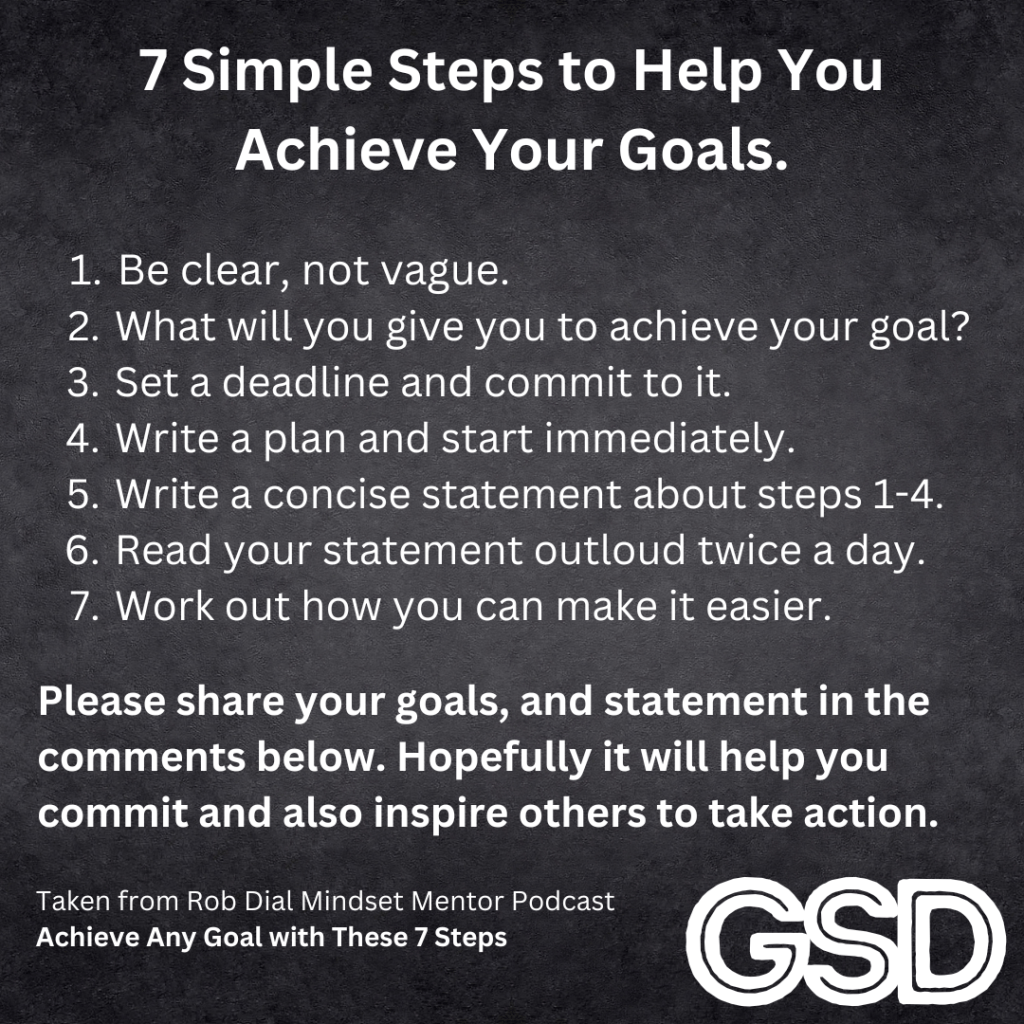
1. Be crystal clear about what you want
This isn’t just about writing a goal down – it’s about making it specific and simple. If a six-year-old couldn’t understand your goal and explain it to another six-year-old, it’s not clear enough.
Saying “I want to lose some weight” is vague. Saying “I want to lose 1 stone, weigh 12 stone and reach 15% body fat by December” is something you can actually visualise and work towards.
2. Decide what you’re willing to give up
This step really stood out. To make space for something new, something old has to go. Rob puts it bluntly: your old self has to die off for the new self to emerge.
That might mean giving up alcohol at weekends, cutting out sweets or saying no to late nights so you can wake up early. Every yes has a corresponding no.
3. Set a real deadline
A goal without a date is just a nice idea. A deadline adds focus and urgency.
So instead of “I want to start running again,” it becomes “I want to run a 10K by 1st August”. When there’s a date on the calendar, your brain starts to take it seriously.
4. Write a plan and start straight away
No more “I’ll start Monday” energy. The moment you know what you want, create a plan and take action immediately – even if it’s just a small step.
Rob shared a trick for when you feel stuck or overwhelmed: write from the perspective of your future self. Imagine it’s already happened and journal what you did to make it happen. It helps unlock creative ideas without the pressure of needing the ‘perfect’ plan.
5. Turn your goal into a short statement
This is where it starts to come together. Write a brief statement that includes the key points from steps 1 to 4.
Keep it short, no essays. Try and keep it to 3–5 sentences and definitely no more than 10. Something you can read in less than a minute that reminds you of exactly what you’re working towards and how you’ll get there.
6. Read it out loud – morning and night
It might feel awkward at first (especially if someone walks in), but this is about reinforcing your focus daily.
In the morning, your brain is in a state that’s more open to suggestion – like kids absorbing the world around them. In the evening, your subconscious is active as you fall asleep. Reading your goal aloud at both times helps lock it into your thinking and keeps it front of mind.
7. Ask: “How can I make this easier?”
We often assume success has to be a struggle, but what if it didn’t?
By asking how you can make things simpler, you shift into problem-solving mode rather than stress mode. Maybe success could feel lighter, even enjoyable. It’s worth asking.
A few examples Rob shared
These brought the steps to life for me:
- Weight loss: “I will lose 20 pounds by 31st December. I’ll stop drinking, cut out sweets, and work out 4 times a week. I’ll meal prep every Sunday and Thursday.”
- Work goals: “I’ll earn £250,000 this year. I’ll stop checking social media during work and focus on 100 calls a day. I’ll follow up every Friday.”
- Mental health: “I’ll reduce anxiety by 1st November. I’ll give up caffeine and stressful relationships. I’ll meditate each morning, journal gratitude and pause every 3 hours for deep breaths.”
Final thoughts
If you follow these steps consistently, you’re not just setting goals – you’re reprogramming your belief in what’s possible. You stop hoping things will change and start building the habits that make change inevitable.
Let me know in the comments if you try this out – I’d love to hear what your statement ends up being.
 GET STUFF DONE
Leave a comment